Few Seats Left for BCA (Honours) – 2026
 - Registration Open
- SITM Courses
- Undergraduate (UG)
- Postgraduate (PG)
- SITM Events
- Hostel Facilities
- Sport Facilities
- Notices
- Photo Gallery
- Video Gallery
- Delnet Library Access

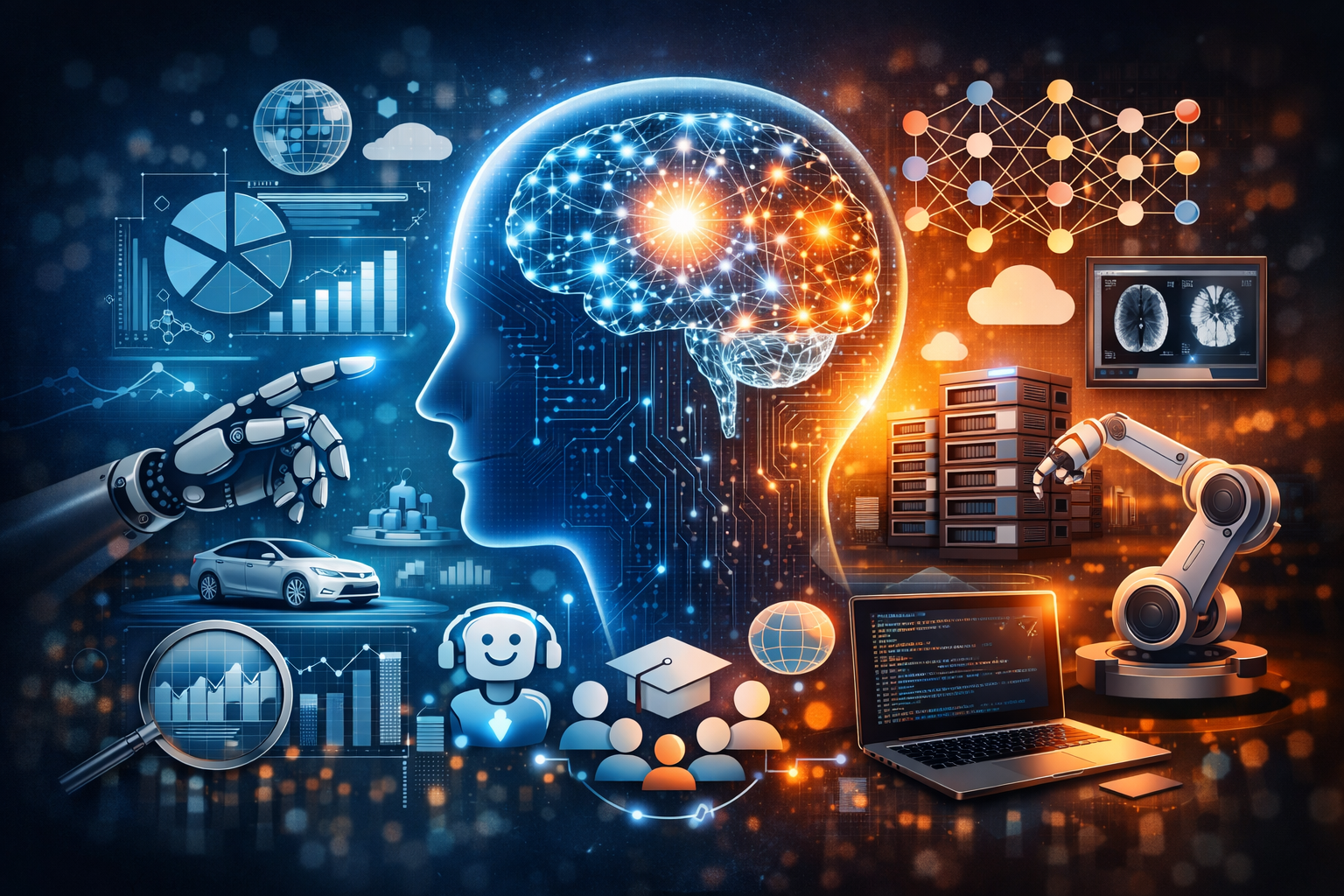
In today’s rapidly evolving digital landscape, Artificial Intelligence (AI) and Machine Learning (ML) have emerged as transformative forces reshaping industries, economies, and everyday life. From personalized recommendations on streaming platforms to advanced healthcare diagnostics, these technologies are driving innovation at an unprecedented pace.
Artificial Intelligence refers to the broader concept of machines being able to carry out tasks in a way that we would consider “smart.” It encompasses a wide range of technologies, including natural language processing, robotics, and computer vision.
Machine Learning, a subset of AI, focuses specifically on the ability of systems to learn and improve from experience without being explicitly programmed. By analyzing large volumes of data, ML algorithms identify patterns and make predictions or decisions with minimal human intervention.
AI-powered systems assist in early disease detection, medical imaging analysis, and personalized treatment plans. ML models can predict patient outcomes and optimize hospital operations.
Banks and financial institutions use AI for fraud detection, risk assessment, and algorithmic trading. Chatbots enhance customer service while reducing operational costs.
Adaptive learning platforms personalize educational content based on student performance, making learning more efficient and engaging.
Recommendation engines analyze customer behavior to suggest products, improving user experience and boosting sales.
Self-driving vehicles and intelligent traffic systems rely heavily on AI and ML to improve safety and efficiency.
Despite their advantages, AI and ML also present significant challenges:
The future of AI and ML is both promising and dynamic. Advancements in deep learning, edge computing, and quantum computing are expected to further enhance capabilities. As organizations increasingly adopt these technologies, the focus will shift toward responsible AI—ensuring systems are ethical, transparent, and inclusive.
Artificial Intelligence and Machine Learning are not just technological trends; they are foundational pillars of the modern digital era. By enabling smarter systems and data-driven decision-making, they are revolutionizing how we live and work. As we move forward, balancing innovation with ethical responsibility will be key to unlocking their full potential.

05-Sep-2026
24-Mar-2026
24-Mar-2026
24-Mar-2026
02-Mar-2026
 Admissions Only